HOME GARDEN
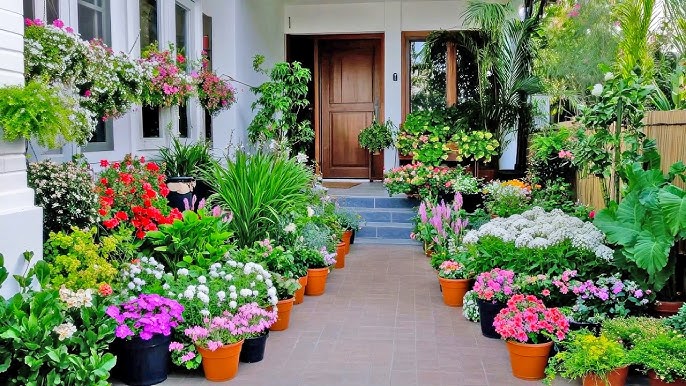
A home garden is a smallish garden near our house where we grow plants, flowers, vegetables, and fruits. It can be made in the neighborhood, balcony, Flower Garden, or even in pots.
People keep a home garden to make their home beautiful, green, and healthy. booming your own plants gives fresh air and healthy food. It also helps us save money and protect the environment.
good care of a garden teaches us sufferance, responsibility, and love for personality.We must water the plants daily, give them sunlight, and remove weeds to keep them healthy.
Home gardens are also good for relaxation and mental peace and good health. Spending time with plants makes us feel happy and calm.
1. Flower Home Garden
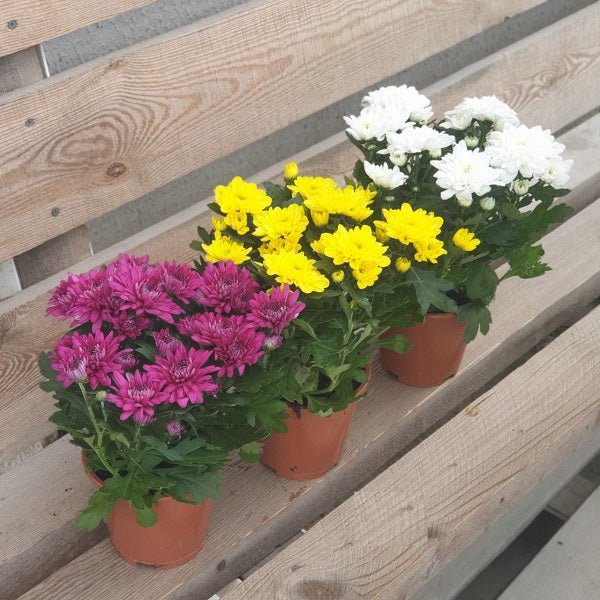
A flower home garden is a small garden near our home where we grow distinguishable kinds of flowers. It classifies our home look beautifuland natural, colorful, and peaceful. Flowers found gardens include jasmine, rose,hibiscus,marigold, and sunflower are common in home gardens.
Flowers give a sweet smell and make the environment fresh and happy. They also attract butterflies and close to nature. It adds beautifulness and joy to our home.
A flower garden is a unique place where we grow unequal types of flowers. It makes our home and environment Over lighting, colorful, and lovely. bouquets like roses, marigolds, jasmines, hibiscus, and sunflowers are commonly planted in home gardens.
Flowers not only add beautifulness but also spread a sweet smell that makes people feel fresh and joyful.They attract screaming meemies bees, and birds, which make the garden more playfully
A flower garden needs sunlight, water, and care to stay healthy. wasting time in a flower garden helps us chill out enjoy nature, and feel benevolent It schools us to love and safeguard plants.
Flowers, also known as blossoms and blooming, are the reproduce structures of flowering plants. Typically, they are structured in four circular levels around the end of a stalk. These include sepals, which are modified leaves that support the flower; petals, often designed to attract pollinators; male stamens, where pollen is presented; and female gynoecia, where pollen is received and its movement is facilitated to the egg. When flowers are arranged in a group, they are known collectively as an inflorescence.
2. Vegetable Garden
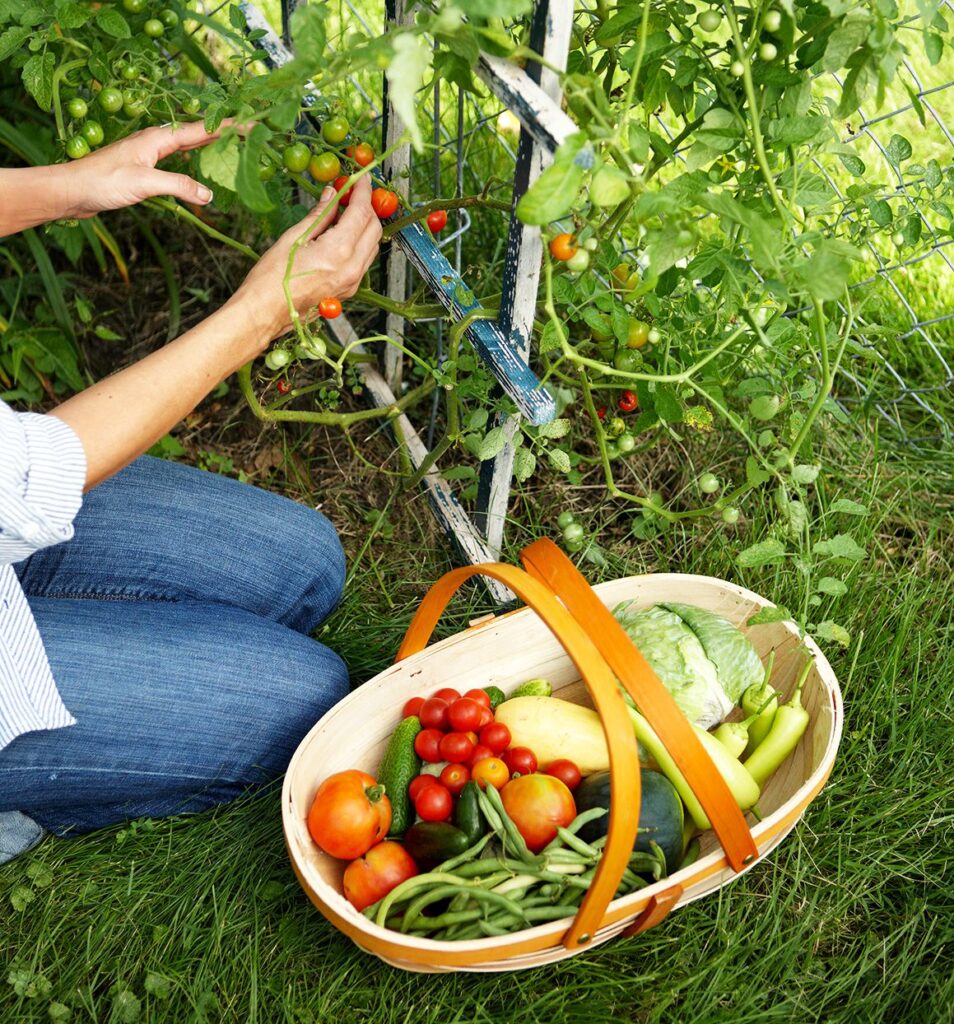
Vegetable gardening is the growing of vegetables for human consumption. The practice probably started in several parts of the world over ten thousand years ago, with families growing vegetables for their own consumption or to trade locally.
At first manual labour was used but in time livestock were domesticated and the ground could be turned by the plough. More recently, mechanisation has revolutionised vegetable farming with nearly all processes being able to be performed by machine. Specialist producers grow the particular crops that do well in their locality.
New methods—such as aquaponics, raised beds and cultivation under glass—are used. Marketing can be done locally in farmer’s markets, traditional markets or pick-your-own operations, or farmers can contract their whole crops to wholesalers, canners or retailers
Several economic models exist for vegetable farms: A relatively small operation is a market garden while a larger farm may grow large quantities of few vegetables and sell them in bulk to major markets or middlemen, which requires large growing operations. A farm may produce for local customers, which requires a larger distribution effort. A farm may produce a variety of vegetables for sale through an on-Farm Stalls, a local farmer’s markets, or a u-pick operation. Such operations differ from commodity farm products like wheat and maize which are less perishable and are sold in bulk to the a local granary. Large cities often have a central produce market which handles vegetables in a commodity-like manner, and manages distribution to most supermarkets and restaurants.
In America, vegetable farms are in some regions known as truck farms; “truck” is a noun for which its more common meaning overshadows its historically separate use as a term for “vegetables grown for market”. Such farms are sometimes called muck farms, after the dark black soil in which vegetables grow well.
3.Kitchen garden
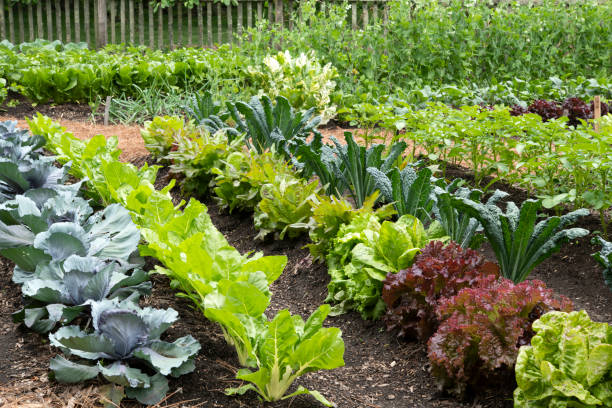
The traditional kitchen garden, vegetable garden, also known as a potager (from the French jardin potager) or in Scotland a kailyaird, is a space separate from the rest of the residential garden
the ornamental plants and lawn areas. It is used for growing edible plants and often some medicinal plants, especially historically. The plants are grown for domestic use; though some seasonal surpluses are given away or sold, a commercial operation growing a variety of vegetables is more commonly termed a market garden (or a farm).
The kitchen garden is different not only in its history, but also its functional design. It differs from an allotment in that a kitchen garden is on private land attached or very close to the dwelling. It is regarded as essential that the kitchen garden could be quickly accessed by the cook.
Historically, most small country gardens were probably mainly or entirely used as kitchen gardens, but in large country houses the kitchen garden was a segregated area, normally rectangular or hedge, walls being useful for training fruit trees as well as offering shelter from wind
[Such large examples very often included greenhouse and furnace-heated hothouses for more tender delicacies, and also flowers for display in the house; an oranery was the ultimate type. In large houses, the kitchen garden was typically placed diagonally to the rear and side of the house, not impeding the views from the front and rear facades, but still quick to access. In some cases, hardy flowers for cutting were grown outside there, rather than in the flower garden . A large country house hardly expected to buy any vegetables, herbs or fruit, and the surplus was often distributed as presents; the walled example at croome court in England covers seven acres, and the gardens have a large “Temple Greenhouse”, an orangery in the form of a ramana temple
A symbol of American self-sufficiency and the colonial homested , practical kitchen gardens were the center of home life in early America. In Europe, especially Britain, the difficulties in food supply during world war resulted in a huge, if temporary, upsurge in growing vegetables in small gardens, with much encouragement from the government ministry of food . In modern gardening, there has been interest in integrating the growing of food plants within a mainly ornamental garden; fruit trees and cooking herbs are the simplest and most popular expression of this.
4.Terrace Garden
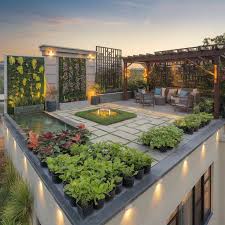
Since a level site is generally regarded as a requisite for comfort and repose, the terrace as a raised viewing platform made an early appearance in the ancient Persian gardening tradition, where the enclosed orchard, or paradise, was to be viewed from a ceremonial tent. Such a terrace had its origins in the far older agricultural practice of terracing a sloping site (see Terrace (agriculture)). The Hanging Gardens of Babylon must have been built on an artificial mountain with stepped terraces, like those on a ziggurat.
brought back to Rome first-hand experience of Persian gardening in the hilly sites of Asia Minor; the villag gardens of manecenas , which included libraries open to scholars, incurred the disdain of seneca. At praeneste during the early Imperial period, the sanctuary of was enlarged and elaborated, the natural slope being shaped into a series of terraces linked by stairs.
The imperial villas at Capri were built to take advantage of varied terraces. At the seaside Villa of the Papyri in Herculaneum, the villa gardens of Julius Caesar’s father-in-law fell away in a series of terraces, giving pleasant and varied views of the Bay of Naples. Only some of them have been excavated. At Villa of Livia, probably part of Livia Drusilla’s dowry brought to the Julio-Claudian dynasty, rooms in the cryptoporticus beneath terracing were frescoed with trees in bloom and fruit.
5.Fruit Garden
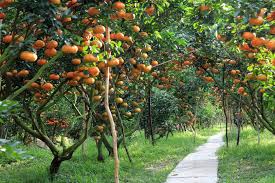
An orchard is an intentional plantation of treesor shrubs that is maintained for food production. Orchards comprise fruit- or nut-producing trees that are generally grown for commercial production. Orchards are also sometimes a feature of large gardens , where they serve an aestetic as well as a productive purpose.
A fruit garden is generally synonymous with an orchard, although it is set on a smaller, non-commercial scale and may emphasize berry shrubs in preference to fruit tress .Most temperate -zone orchards are laid out in a regular grid, with a grazed or mown grass or bare soil base that makes maintenance and fruit gathering easy.
Most modern commercial orchards are planted for a single variety of fruit. While the importance of introducing is recognized in forest plantations, introducing genetic diversity in orchard plantations by interspersing other trees might offer benefits. Genetic diversity in an orchard would provide resilience to pests and diseases, just as in forests.
Orchards are sometimes concentrated near bodies of water where climatic extremes are moderated and blossom time is retarded until frost danger is past.
6.Herb Garden
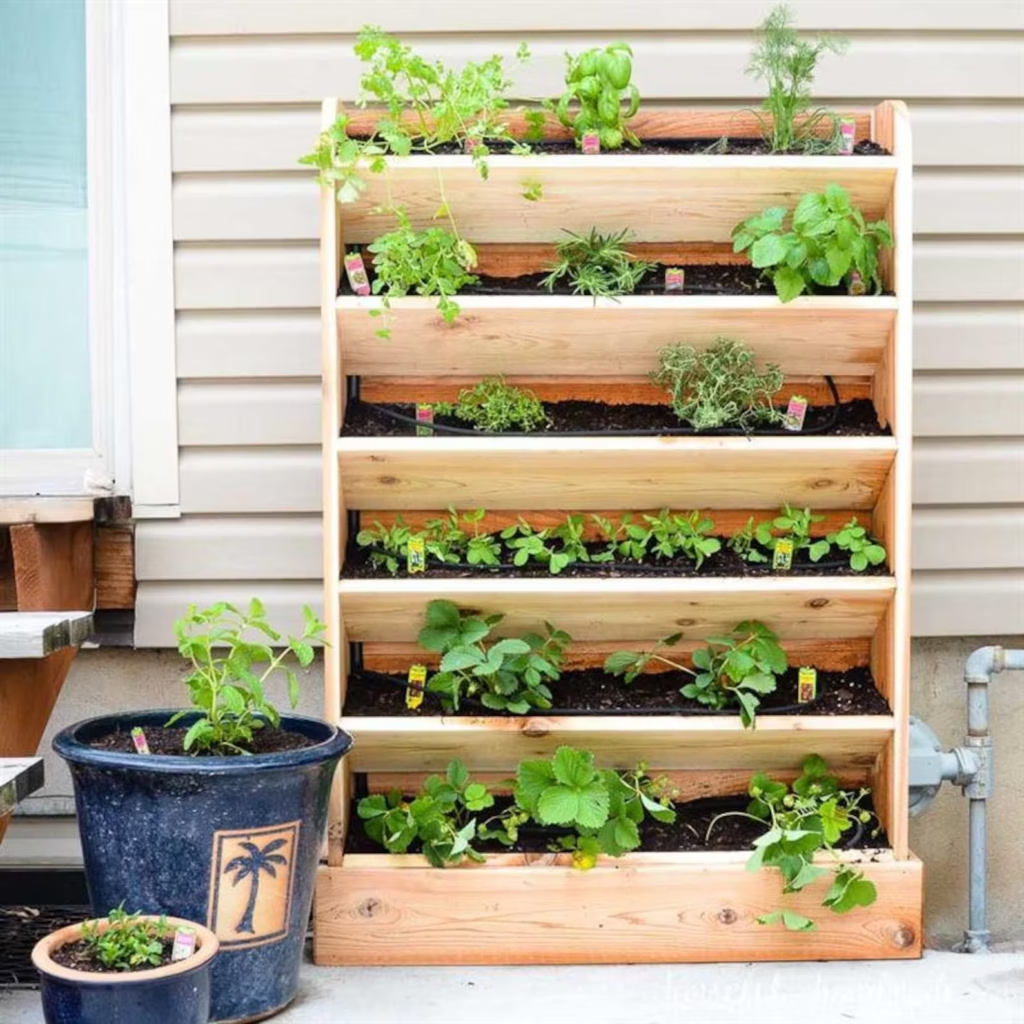
The herb garden is often a separate space in the garden, devoted to growing a specific group of plants known as herbs. These gardens may be informal patches of plants, or they may be carefully designed, even to the point of arranging and clipping the plants to form specific patterns, as in a knot garden.
Herb gardens may be purely functional, or they may include a blend of functional and beautiful plants. The herbs are usually used to flavor food in cooking, though they may also be used in other ways, such as discouraging pests, providing pleasant scents, or serving healthful purposes (such as a physic garden), among others.
A kitchen garden can be created by planting distinguishable herbs in pots or containers, with the added benefit of mobility. Although not all herbs thrive in pots or containers, some herbs do better than others. Mint, a fragrant yet invasive herb, is an example of an herb that is advisable to keep in a container, or it will take over the whole garden.
Conclusion
A home garden adds beautyfull, freshness, happiness,good ideas help to our lives.
It helps us stay close to nature, stay healthy, and live in a clean surroundings.
Even a small garden can make a big distinctiveness in our home garden and heart.